Blueberry bushes I lovingly planted with good dirt, etc.(first 2)


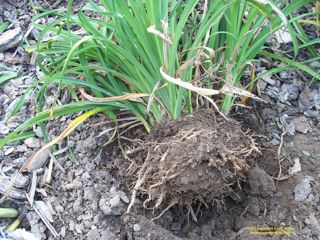
Blueberry bushes Ernesto planted while I was in the hospital
by digging a hole, putting the plant in the hole and putting
the same clump of grass back that he dug out!
Blueberry bushes I lovingly planted with good dirt, etc.(first 2)
Blueberry bushes Ernesto planted while I was in the hospital
by digging a hole, putting the plant in the hole and putting
the same clump of grass back that he dug out!

Yesterday I counted about 200 green tomatoes on the plants… hhmmm…
Green Tomato Bread
Instructions --------Preheat oven to 350 degrees. Grease and flour two loaf pans. Combine oil, yogurt, eggs, sugar, Splenda and green tomatoes in a large bowl and mix well. Sift together all purpose flour, baking powder, baking soda, and spices and add to wet ingredients along with the whole wheat flour. Stir together just until combined. Divide evenly between two prepared pans and bake just until a toothpick comes clean from the center of the bread, about 45 minutes. Let cool in pans, then remove. To retain moisture, wrap in plastic wrap and store in the refrigerator. May be frozen.
While many people think of the dandelion (Taraxacum officinale) as a pesky weed, herbalists consider it a valuable herb that can be used as a food and medicine. Dandelion is a rich source of vitamins A, B complex, C, and D, as well as minerals such as iron, potassium, and zinc. Dandelion leaves are used to add flavor to salads, sandwiches, and teas. The roots are used in some coffee substitutes, and the flowers are used to make wines.
Traditionally, dandelion roots and leaves were used to treat liver problems. Native Americans also boiled dandelion in water and took it to treat kidney disease, swelling, skin problems, heartburn, and upset stomach. In traditional Chinese medicine, dandelion has been used to treat stomach problems, appendicitis, and breast problems, such as inflammation or lack of milk flow. In Europe, it was used in remedies for fever, boils, eye problems, diabetes, and diarrhea.
So far, there have not been any good quality scientific studies on dandelion. Today, the roots are mainly used as an appetite stimulant, and for liver and gallbladder problems. Dandelion leaves are used as a diuretic to help the body get rid of excess fluid.
Hundreds of species of dandelion grow in the temperate regions of Europe, Asia, and North America. Dandelion is a hardy perennial that can grow to a height of nearly 12 inches. Dandelions have deeply notched, toothy, spatula-like leaves that are shiny and hairless. Dandelion stems are capped by bright yellow flowers. The grooved leaves funnel rain to the root.
Dandelion flowers open with the sun in the morning and close in the evening or during gloomy weather. The dark brown roots are fleshy and brittle and are filled with a white milky substance that is bitter and slightly smelly.
Dandelion leaves act as a diuretic, increasing the amount of urine the body produces. The leaves are used to stimulate the appetite and help digestion. Dandelion flower has antioxidant properties. Dandelion may also help improve the immune system.
Herbalists use dandelion root to detoxify the liver and gallbladder, and dandelion leaves to support kidney function.
Traditionally, dandelion has been used a diuretic, to increase the amount of urine the body produces in order to get rid of excess fluid. It has been used for many conditions where a diuretic might help, such as liver problems and high blood pressure. However, there is no good research on using dandelion as a diuretic in people.
Fresh or dried dandelion herb is also used as a mild appetite stimulant and to improve upset stomach. The root of the dandelion plant may act as a mild laxative and has been used to improve digestion. There is some very preliminary research that suggests dandelion may help improve liver and gallbladder function, but the study was not well designed.
Some preliminary animal studies also suggest that dandelion may help normalize blood sugar levels and lower total cholesterol and triglycerides while raising HDL, "good," cholesterol in diabetic mice. But not all the animal studies have found a positive effect on blood sugar. Human studies are needed to see if dandelion would work in people.
A few animal studies also suggest that dandelion might help fight inflammation.
Dandelion herbs and roots are available fresh or dried in a variety of forms, including tinctures, liquid extract, teas, tablets, and capsules. Dandelion can be found alone or combined with other dietary supplements.
Pediatric
Ask your doctor before giving dandelion supplements to a child, so your doctor can help you determine the dose. Eating dandelion in food is safe for a child.
Adult
Ask your doctor to help you determine the right dose for you. Some traditional doses include:
The use of herbs is a time-honored approach to strengthening the body and treating disease. Herbs, however, contain components that can trigger side effects and interact with other herbs, supplements, or medications. For these reasons, you should take herbs with care, under the supervision of a health care provider.
Dandelion is generally considered safe. Some people may develop an allergic reaction from touching dandelion, and others may develop mouth sores.
If you are allergic to ragweed, chrysanthemums, marigold, chamomile, yarrow, daisies, or iodine, you should avoid dandelion.
In some people, dandelion can cause increased stomach acid and heartburn. It may also irritate the skin if applied topically.
People with kidney problems, gallbladder problems, or gallstones should ask their health care provider before eating dandelion.
Dandelion leaf may act as a diuretic, which can speed up how fast drugs leave your system. If you are taking prescription medications, ask your health care provider before taking dandelion leaf. If you are currently being treated with any of the following medications, you should not use dandelion without first talking to your health care provider:
Antacids -- Dandelion may increase the amount of stomach acid, so antacids may not work as well.
Blood-thinning medications -- Theoretically, dandelion may increase the risk of bleeding, especially if you already take blood-thinners such as aspirin, warfarin (Coumadin), or clopidogrel (Plavix).
Diuretics (water pills) -- Dandelion may act as a diuretic, increasing the amount of urine to help your body get rid of excess fluid. If you also take prescription diuretics or other herbs that act as diuretic, you could be at risk for an electrolyte imbalance.
Lithium -- Animal studies suggest that dandelion may make the side effects of lithium worse. Lithium is used to treat bipolar disorder.
Ciproflaxin (Cipro) -- One species of dandelion, Taraxacum mongolicum, also called Chinese dandelion, may lower the absorption of the antibiotic ciproflaxin from the digestive tract. Researchers don' t know whether the common dandelion would do the same thing.
Medications for diabetes -- Theoretically, dandelion may lower blood sugar levels. If you take medications for diabetes, taking dandelion may increase the risk of low blood sugar.
Lion's tooth; Priest's crown; Swine's snout; Taraxacum officinale
Read more: http://www.umm.edu/altmed/articles/dandelion-000236.htm#ixzz29HVGfO4B
Gardens Ablaze gives a very nice summary of the many health benefits of the common dandelion:
The humble little Dandelion has remarkable nutritional value, being very high in vitamins A and C, with more beta carotine than carrots and more potassium than broccoli or spinach, not to mention healthy doses of iron and copper for good measure. Medicinally, Dandelions are considered very safe and effective as a general tonic that helps strengthen the liver, gallbladder, pancreas, spleen, stomach, and intestines, improving bile flow and reducing inflammation in cases of hepatitis and cirrhosis. Dandelions also help to dissipate gallstones and are believed to improve kidney function, thereby improving overall health and clearing skin problems.
Dandelion tea is the perfect choice for those with the above problems or those who lead relatively sedentary lifestyles and who experience discomfort associated with this, such as constipation, digestive disorders, indigestion, and general sluggishness and fatigue. Just one cup per day will yield noticeable results within the first few months. Tea may also be of benefit for many of the problems associated with diabetes and low blood sugar.
Externally, the white sap from the stems or roots can be applied directly to ease the pain of sores and bee stings, and is useful in the elimination of warts, acne, and calluses.
Dandelion coffee is made by grinding roasted roots, and makes a nice substitute for regular coffee, but without the caffeine (see main Dandelionpage for instructions). People who can't tolerate much coffee can drink as much as they please and reap the health benefits without any side-effects. For the sweets lover, ground root mixed with warm milk and a little sweetener makes a very tasty and nutritious creamy beverage with few calories.
Although dandelion is generally considered safe, like any food/herb it may cause reactions in some individuals. The University of Maryland Medical Center offers a more detailed explanation of medicinal uses of dandelion, along with potential drug interactions.
….Now I know what I can do with that bowling ball that’s been floating around in my yard all summer!!


Here are some things you can use dehydrated fruit for.
Well I should have taken a picture it was so pretty!
Tomatoes: red, yellow, darker red (so good)
Cherry tomatoes: red, yellow
Tomatillos: purple, verde
Not shown… red and green peppers and peaches
Chopped ‘em all up and added some already made salsa for flavoring and it was yummy!

and Larsen has a 22% chance of precipitation …. go figure… this is why my soil is sandy I guess….
….for the tomato plants, that is!!
9:20 in the morning – not so bad… will water later…
4:00 in the afternoon!! What happened?!?! OMG! Get the hose QUICK!!!
Two hours after the watering and good thoughts!! (Picture immediately above and below are the back of the row of tomatoes. What a difference!




…. should go in here.. no… maybe raspberries… hhmmm… well before anything is planted there has to be dirt!
Doesn’t look like much now but I see strawberries, raspberries and blueberry bushes along this fence and some wildflowers surrounding the concrete blocks!
… I see trellises…. $2 each for the ones that look like a deck railing and $1.50 each for the vertical ones!
….and since I already had the truck to get the blocks I thought I might as well take advantage of the shelves for $5 each and the almost-new-I-can-believe-someone-would-get-rid-of-the-chairs-just-because-the-glass-table-blew-away lawn chairs that are REALLY comfortable!
OMG! I bought 54 concrete blocks at ReStore in Appleton today for $.25 each…. that’s twenty-five cents each!! Can you say “RAISED BEDS”!
A ripe pear is a sweet pear.
A little known fact about the pear is that it is one of the few fruits that does not ripen on the tree. The pear is harvested when it is mature, but not yet ripe, and, if left at room temperature, it slowly reaches a sweet and succulent maturity as it ripens from the inside out.
As tempting as the pear might be right from the grocer’s stand, a little bit of patience and know-how will ensure the pear reaches its peak flavor.
So, how do you know when the pear has ripened to sweet and juicy perfection?
While a Bartlett’s skin color brightens as it ripens, most varieties of pears show little change in color.
The best way to judge ripeness for non-Bartlett varieties is to Check the Neck™: Apply gentle pressure to the neck of the pear with your thumb. If it yields to pressure, it’s ripe. Easy, isn’t it?
Here’s what you need to do to ripen your pears:
Keep a fresh fruit fresh.
Like many fruits, the flesh of cut or peeled pears will eventually brown. This natural oxidation process won’t affect the taste or quality. However, to keep your pears looking appetizing and to prevent browning, dip them in a mild solution of 50% water and 50% lemon juice!
Remember, don’t refrigerate an unripe pear!
Ripened pears can be used at once or put under refrigeration (35º to 45º F) until you want to use them. Refrigeration will delay further ripening but will not stop it altogether, giving you adequate time to include fresh pears in your menu planning. Remember, pears need to ripen at room temperature, so don’t refrigerate an unripe pear!
Flavor well worth the wait
Place underripe pears in a fruit bowl at room temperature near other ripening fruit like bananas, which naturally give off ethylene and will help speed up the ripening process. And if you find yourself with a few too many overripe pears, blend them into smoothies, soups, sauces and purees!
The front of the raised bed!
The rear of the raised bed!
Waiting to see what this is!
Yum… little tomatoes slightly bigger than cherry tomatoes.
So what the heck are tomatillos? We’ll see!


