Thursday, August 23, 2012

You see junk…

…  I see trellises….  $2 each for the ones that look like a deck railing and $1.50 each for the vertical ones! 

….and since I already had the truck to get the blocks I thought I might as well take advantage of the shelves for $5 each and the almost-new-I-can-believe-someone-would-get-rid-of-the-chairs-just-because-the-glass-table-blew-away lawn chairs that are REALLY comfortable!

2012-08-23 13.41.352012-08-23 13.41.572012-08-23 13.30.22

Wednesday, August 22, 2012

Concrete blocks!!

OMG!  I bought 54 concrete blocks at ReStore in Appleton today for $.25 each….  that’s twenty-five cents each!!  Can you say “RAISED BEDS”!

Tuesday, August 21, 2012

Pear answers!!

A ripe pear is a sweet pear.

A little known fact about the pear is that it is one of the few fruits that does not ripen on the tree.  The pear is harvested when it is mature, but not yet ripe, and, if left at room temperature, it slowly reaches a sweet and succulent maturity as it ripens from the inside out.

As tempting as the pear might be right from the grocer’s stand, a little bit of patience and know-how will ensure the pear reaches its peak flavor.

So, how do you know when the pear has ripened to sweet and juicy perfection?

While a Bartlett’s skin color brightens as it ripens, most varieties of pears show little change in color.

The best way to judge ripeness for non-Bartlett varieties is to Check the Neck™: Apply gentle pressure to the neck of the pear with your thumb. If it yields to pressure, it’s ripe.  Easy, isn’t it?

Here’s what you need to do to ripen your pears:

  • Leave firm, unripe pears at room temperature so that they can ripen.
  • Check the Neck for Ripeness daily, by applying gentle pressure to the neck, or stem end, of the pear with your thumb. If it yields to pressure, then it’s ripe and ready to eat!
  • Once the pear is ripe, it can be refrigerated to slow the ripening process and saved for use up to five days later.
To Prevent Browning

Keep a fresh fruit fresh.
Like many fruits, the flesh of cut or peeled pears will eventually brown. This natural oxidation process won’t affect the taste or quality. However, to keep your pears looking appetizing and to prevent browning, dip them in a mild solution of 50% water and 50% lemon juice!

Refrigerating Pears

Remember, don’t refrigerate an unripe pear!
Ripened pears can be used at once or put under refrigeration (35º to 45º F) until you want to use them. Refrigeration will delay further ripening but will not stop it altogether, giving you adequate time to include fresh pears in your menu planning.  Remember, pears need to ripen at room temperature, so don’t refrigerate an unripe pear!

Speedy Ripening

Flavor well worth the wait
Place underripe pears in a fruit bowl at room temperature near other ripening fruit like bananas, which naturally give off ethylene and will help speed up the ripening process. And if you find yourself with a few too many overripe pears, blend them into smoothies, soups, sauces and purees!

Now what?

….and there are more to pick!
2012-08-21 07.10.522012-08-21 07.11.082012-08-21 07.11.31

Tomatoes!


2012-08-19 07.50.23

Thursday, August 16, 2012

Can’t forget the flowers!

2012-08-16 07.08.202012-08-16 07.08.282012-08-16 07.09.042012-08-16 07.09.072012-08-16 07.09.12

Monday, August 13, 2012

Tomato update

The front of the raised bed!

2012-08-11 12.06.06

The rear of the raised bed!

2012-08-11 12.06.33

Waiting to see what this is!

2012-08-11 12.04.44

Yum… little tomatoes slightly bigger than cherry tomatoes.

2012-08-11 12.05.04

So what the heck are tomatillos?  We’ll see!

2012-08-11 12.05.28

Sunday, August 12, 2012

Raspberries–gotta get them planted!!

This looks like a good idea!!
Raised beds eliminate root rot

The original 20 plants have grown into a full bed from which the author picks 2 gallons of raspberries a day during the summer months, roughly a pint per plant, though the amount tapers off as fall approaches.

Raspberry plants hate wet feet, and they are gross feeders. We addressed these two critical points by building a 20-inch-high raised bed and filling it with a mixture of four-fifths good garden topsoil blended with about one-fifth sand, peat, and well-rotted manure. If, like us, you have acidic soil, you will also need to add some lime, because raspberries prefer a soil pH of around 6.0. We left one end of the box open to allow easy access with our wheelbarrows, then closed it in when the box was full. This job can be done in the fall, so you are ready to plant, come spring.

If you have rich, deep soil that drains well year-round, you can simply plant your raspberries in a permanent garden site. Not us. The Pacific Northwest gets rain all winter, and many gardeners lose raspberries to root rot because they make the mistake of planting their raspberries' fussy little toes directly in the ground, which is often soggy clay covered with a skim of topsoil. We also experience a two-month drought most summers. Raised beds allow us to have deep soil that holds moisture evenly yet drains well.

It is important that you do not establish your raspberry patch in an area where you have recently grown tomatoes, peppers, or potatoes, to avoid verticillium wilt, which these vegetables can carry, and raspberries can catch.

Holy tomatoes! …look at all these colors!

Striped and Bi-Colored Tomatoes

  • Big Rainbow - These 2 pound tomatoes have green shoulders, a yellow midsection, and neon red streaks running through them. Terrific slicing variety.
  • Copia - This newer open-pollinated variety that's an extremely unique-looking tomato. The skin has fine striping of brilliant gold and neon red. The flesh is swirled red and yellow. It's juicy and flavorful.
  • Green Zebra - A favorite chef's variety that's extremely striking in color with yellow-gold skin and stripes of lime green. It has a rich, sweet flavor that gives just a little bite - excellent taste.
  • HillBilly (Flame) - This is a 4" - 6", yellow, flattened fruit with rose "flames" on its skin and throughout the flesh. It's been described as meaty, creamy, rich, and sweet. It's also crack-resistant and makes a gorgeous slicing tomato.
  • Isis Candy Cherry -This is a sweet and fruity cherry tomato that comes in different shades with blushed patterns on them. Usually they have a "cat's eye" at the blossom end.
  • Marizol Gold - This German heirloom from the 1800s. These are flattened, deeply ribbed, red and gold bicolor tomatoes. It's a prolific producer with delicious flavor.
  • Mary Robinson's German Bi-color - This is a large, yellow fruit that with lots of red shading and stripes. It's sweet and mild in flavor.
  • Old German - Southern Exposure Seed Exchange introduced this Mennonite family heirloom in 1985. It has outstanding flavor and its color is yellow with a red center through the whole tomato. The fruits often weigh more than a pound.
  • Pineapple - This 2 pound tomato is beautiful to serve with its yellow skin and red marbling. It has a sweet and fruity flavor.
  • Striped Roman (Speckled Roman) - Striped Roman is an amazing-looking variety that you'll never recognize as a tomato. The fruit's unique shape is cylindrical, 3" x 5" long, and pointy. Their base color is red, but they have wavy yellow stripes. It's a meaty and excellent-flavored tomato.

Black, Purple, and Brown Tomatoes

  • Black from Tula - This rare Russian heirloom ties for best-tasting black with Black Krim. The deep, purple-brown variety is a large, 8-12 ounce tomato with a rich, sweet, and spicy flavor.
  • Black Krim - This is one of the best of the black tomatoes. It's a very juicy, dark red-purple fruit from Russia and was named for the Crimean peninsula in the Black Sea.
  • Black Prince - This black-chocolate brown heirloom comes from Siberia. It has a deep and sweet flavor that's wonderful on salads.
  • Cherokee Purple - This is a pre-1890 Cherokee Indian heirloom tomato that's an old favorite. It's a dark, purple-pink color and has a fabulously sweet flavor.
  • Eva Purple Ball - This German heirloom is a lovely and terrific performer in hot growing zones. The fruits are a rich, pink-purple color and weigh 4-5 ounces.
  • Gypsy - This colorful fruit is named for the Russian gypsies. It's a very deep purple-maroon color and has great flavor.
  • Paul Robeson - This Russian variety was named in honor of the black opera singer and Russian equal rights advocate. It's an extremely popular variety with seed collectors and connoisseurs. It's black-brick in color and has a smoky, sweet, rich flavor that's hard for gardeners to resist.
  • True Black Brandywine - Here's one for the collectors out there. Apparently, True Black Brandywine came from the Quaker family of the renowned William Woys Weaver. This black-purple tomato dates back to the 1920s. The delicious fruits that have a sweet, earthy flavor.
  • Violet Jasper or Tzi Bi U - This delicious, high-yielding little fruit is an absolutely gorgeous violet-purple color striped with an iridescent green.
  • Vorlon - This heirloom is from Bulgaria but named after a fictional alien race. This lovely purple-black tomato has a rich, smoky, organic flavor. Baker Creek Heirloom Seeds introduced it this year.

White Tomatoes

  • Cream Sausage or Banana Cream - Cream Sausage produces white to light yellow, sausage-shape fruits have a nice, sweet flavor. It's perfect for salsas and makes a lovely cream-color cream sauce.
  • Great White - This creamy white, beefsteak tomato weighs in at 1 pound and is smoother than most of the beefsteak types. Baker Creek describes the flesh as tasting so fruity that it reminds them of a mix of fresh pineapple, melon, and guava.
  • Ivory Egg - This is a rare cream-color tomato that comes from Sweden. Ivory Egg has the shape and size of a chicken egg and the flesh is sweet and rich in flavor.
  • Shah/Mikado White - These creamy-white fruits are flattened globes with a hint of blush at the blossom end when they're ripe. They have a seriously sweet flavor with a hint of pear.
  • White Queen - This almost white, 3 pound, round, and flat tomato has ribbed shoulders and possibly some pink streaks on the blossom end. Make a fabulous white pasta sauce.
  • White Tomesol - Those gourmet gardeners are going to love this heirloom. The fruit is a beautiful, cream-color and has a wonderful fragrance. It has exceptionally sweet flavor.
  • White Wonder - This white tomato variety was chosen for the famous Chez Panisse restaurant owned by Alice Waters. These are medium-size, creamy white fruits that have a sugary-sweet flavor and are easy to grow.

Another mystery weed…

popping up in the training area…

2012-08-12 19.29.122012-08-12 19.29.31

Monday, August 6, 2012

Note to self…

Do not plant in pots!  They dry out WAY too fast!

Follow up note to self...   Planting in pots is ok if you have a pot that doesn't dry out and something to put it on/in to hold water for plant to absorb it.

Dehydrating!


Leftover chili,
carrot tops ( a good substitute for parsley flakes) and
green peppers (25 dehydrated to make what is in that jar!)

2012-08-04 03.12.02

Friday, August 3, 2012

Clearly growing!!

The mystery plant growing in the seldom used driveway south of the house!

2012-08-03 21.46.312012-08-03 21.45.482012-08-03 21.45.57

Now that’s a garden!!

My neighbor and my go-to person…  I guess you would say “mentor” with this whole gardening thing!

2012-08-03 21.50.36   2012-08-03 21.50.46   2012-08-03 21.50.49   2012-08-03 21.51.09   2012-08-03 21.51.22   2012-08-03 21.51.37   2012-08-03 21.51.40

A quick trip to the garden!

Get the juicer and dehydrator going!! 

2012-08-04 03.04.56

Thursday, August 2, 2012

Peach leaves… edible!

IMG_5486
Peach Leaves
Who knew that peach leaves could be edible? Well maybe not edible, but useful in flavoring what you are about to eat. Someone, at some point found out that peach leaves impart a beautiful almond and floral flavor to whatever they might be steeped in. You can pick a few brand new tender peach leave to steep in milk for about five minutes and use that milk to make ice cream or a peach leaf custard.

Peach Leaf Custard

Every European country has it's own version of custard. And why not? Little children love it. It is easy to digest and very delicate. The ingredients are always on hand. Here is a version Nona Zurlo made occasionally. It no doubt hearkens back to a time when flavorings did not come in little bottles. Whenever we paid a call on anyone, Nona would invariably ask her hostess for a tour of the garden. Little "slips" of flowers and shrubs would always be requested and if there was a peach tree a few leaves would be tucked into Nona's bag. The taste is delicate and unique. If you are having John Ash or Martha Stewart to dinner sometime we guarantee they will be asking you for this recipe and wondering about the source of the flavor.


2 1/4 cups milk
6 fresh peach leaves, washed and dried
5 egg yolks
7 tablespoons sugar
pinch of salt

  • Crush the leaves a bit to release flavor.
  • Heat milk and peach leaves to below boiling.
  • Set aside for 60 minutes.
  • Beat egg yolks with sugar and pinch of salt.
  • Strain into milk.
  • Heat over double boiler until thickened, taking care that the mixture does not boil.
  • Remove from heat and let stand in a pan of ice water.
  • Remove leaves. Pour into serving cups or glasses.
  • A baby OAK tree!


    Must have been planted by a squirrel!  It’s right in the middle of the path where we walk!

    2012-08-02 06.32.39

    Friday, July 27, 2012

    Blueberry Plants Productive When Beds Get A Raise

    Right down my alley….  I think the blueberry bushes are going to get a raise!

    The practice of growing fruits and vegetables on raised beds has proved to be successful for blueberries, providing growers with a cheaper, more beneficial alternative production method.

    Ohio State University research has found that blueberries grown on raised beds produced comparable yields to blueberries grown on flat, tile-drained soil.

    "We can say with 90 percent certainty that raised beds are sufficient for blueberries," said Dick Funt, an OSU horticulturist. "There's no need to install a costly tile drainage system when a grower can get equal or better yields on raised beds."

    Thursday, July 26, 2012

    I know how to make it rain!

    ….water plants really good and hang clothes out to dry!!!  

    If that’s what it takes – I’m THERE!

    Ta DA!!

    Back to Waupaca today to a class to make Jam… and it was BLUEBERRY jam!  I brought the carrots and tomato jars from yesterday home along with the blueberry jam which is half gone already!!!!
    2012-07-26 01.00.46

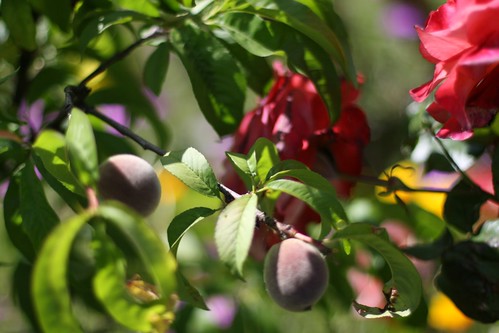
    Pears… getting big!

    The tree hasn’t died after falling over!! 


    2012-07-26 17.31.56

    2012-07-26 17.32.18

    Wonder why my fingers look pink..  they weren’t!

    Oh no…

    What’s wrong with the tomatoes?  Pretty on top – ugly on bottom??

    2012-07-26 18.09.27

    2012-07-26 18.06.262012-07-26 18.06.36

    See…

    Green Bay 1.79 inches of rain
    Fond du lac 2.94 inches of rain
    Appleton 0.04 inches of rain

    image

    Wednesday, July 25, 2012

    Learning to can…

    Here I am in Waupaca at the UW extension at the courthouse learning how to can… it was hands on…  very cool!   Carrots and tomato sauce!

    2012-07-25 13.57.362012-07-25 14.01.27

    ….and this was the temperature when I got in my van to come home…  and it stayed that high!

    2012-07-25 14.52.51

    morning and evening… misses again..


    image

    image

    Tuesday, July 24, 2012

    Look what else I found…

    ….in the back yard…  wonder what it is??

    2012-07-24 07.36.11

    Even more weeds…

    are dying….

    2012-07-24 07.39.34

    Still going strong…

    … with no water or care…  go figure…

    2012-07-24 07.38.32

    Is it heading our way???

    NNNOOOOO…… out to water AGAIN…

    image